Wednesday, September 24, 2014

NYT Columnist Joe Nocera Hides Major Conflict of Interest Over Chevron's Ecuador Case

Reposted from The Chevron Pit

We have long known business writer Joe Nocera to be the resident lightweight of the NYT op-ed page. He clearly lacks the supple analytical insight often seen in the writing of his colleagues Maureen Dowd, Thomas Friedman, Charles Blow, David Brooks, and Paul Krugman.

It was no surprise, then, when Nocera decided to help his Businessweek buddy Paul Barrett promote his one-sided new book on Chevron's ecological calamity in Ecuador. Barrett's thesis – which Nocera adopts wholesale – is that a good case against Chevron was spoiled by the hubris of New York human rights attorney Steven Donziger. The truth is far more complicated.

Because of the tenacious lawyering of Donziger and his Ecuadorian colleagues, Chevron now faces the potential seizure of billions of dollars of strategically important company assets in Canada, Brazil, and Argentina. Eight separate appellate judges in Ecuador – the country where Chevron wanted the trial held – have ruled against the company. This includes a unanimous five-judge panel from Ecuador's Supreme Court.

Barrett ignores virtually all of this in his book. So does Nocera in his column.

(For more on Donziger's perspective that Nocera and Barrett ignore, see this op-ed published today on the website of Inside Counsel magazine. Donziger also wrote a highly detailed letter to Barrett and his publisher documenting the writer's shoddy reporting, fictional scenes, lazy technique, and factual errors. That letter can be read here.)

Nocera obviously tried to help salvage Barrett's credibility problems by attacking Donziger. What is surprising is how Nocera blew off the overwhelming evidence of Chevron's liability in Ecuador. Here's an email Donziger sent to Nocera before he wrote. Virtually none of this highly relevant information made it into the published column.

Also surprising – no, inexcusable – is how Nocera failed to disclose in the column that his spouse is a lawyer and public relations director for a prominent New York litigation firm hired by Chevron to work on the Ecuador environmental case. The main adversary of the firm? None other than Donziger, the lawyer Nocera attacks. Oops!

We have since learned that there is a disturbing pattern to Nocera's conflicts. Consider:

  • Nocera’s wife, Dawn Schneider, is the communications director for the Boies Schiller law firm headed by well-known litigator David Boies. Chevron hired the firm to work on critical discovery issues related to the Ecuador case. Here are legal briefs [HERE and HERE] that demonstrate the firm's deep involvement in defending Chevron against corruption allegations. Nocera did not disclose his wife's connection to this law firm in his column.
  • In 2006, Nocera was roundly criticized for writing a cover story for the New York Times Magazine on the tobacco company Altria (formerly Phillip Morris) that was surprisingly soft. The public relations person for Altria who worked directly with Nocera on the article? None other than the erstwhile Dawn Schneider.
  • On another occasion, Nocera wrote in his column about a litigation dispute between Oracle and SAP in which he passed judgment in favor of Oracle. But Oracle also was a client of David Boies, the immediate boss of Dawn Schneider. Nocera failed to disclose this fact as well. Details of that embarrassing episode – which caused the NYT to publish a clarification – are here.

Nocera's latest column attacking Donziger relies heavily on the findings of activist U.S. judge Lewis A. Kaplan that purports to overturn a unanimous decision by Ecuador's Supreme Court on questions of Ecuadorian law. Kaplan himself disparaged the Ecuadorians from the bench and made a mockery of justice as this document explains in some detail.

Nocera also ignored evidence of Chevron's bribes, witness tampering, and cooking of evidence in the Ecuador and U.S. trials – all readily available in public documents, including in Donziger's 130-page brief.

Barrett's book is largely an apologia for Chevron's atrocious behavior in the Amazon rainforest. He spent only a handful of days in Ecuador. Barrett also failed to interview anybody of import on either side of the litigation. And he topped it all off by repeating many of Chevron's talking points in testimony this summer before the U.S. Congress where he sat next to a partner from Chevron's lead outside law firm. See here for the details.

Nocera is also friends with Fortune writer Roger Parloff, another full-throated advocate for Chevron trying to masquerade as an independent journalist. For more about Parloff's own lack of ethics, read this recent blog post.

We have asked Nocera to disclose the conflict of interest over his wife’s role in the law firm involved in the Ecuador litigation. He will have a chance to do so in his next column.

We're not holding our breath.

Friday, September 19, 2014

Fortune's Roger Parloff Now Helping Chevron Smear Those Who Held It Accountable

Reposted from The Chevron Pit

Fortune legal reporter Roger Parloff seems upset over Chevron's diminishing prospects of evading its $9.5 billion environmental liability in Ecuador.

We have written previously about Parloff's slanted reporting in favor of Chevron. For months, with no conceivable justification, he has refused to print our detailed letter to the editor pointing out the many flaws in his reporting about Chevron's claims of "fraud" in the Ecuador judgment.

Chevron's claims have been rejected by no fewer than eight separate appellate judges in Ecuador and six separate federal appellate courts in the U.S. But Parloff, relying on an outlier decision by an activist U.S. judge who already has been reversed on appeal in humiliating fashion, continues to stand by Chevron's claims.

Lest there be any doubt, Parloff this week outed himself as a full-throttled apologist for Chevron's human rights abuses in Ecuador. He also jumped on the Chevron bandwagon to help push the company's strategic "demonization" campaign against its main litigation adversary, New York human rights lawyer Steven R. Donziger. (An email in 2009 from Chevron public relations consultant Chris Gidez was explicit: Chevron's "long term strategy is to demonize Donziger.")

In defense of a deeply flawed book by his friend, reporter Paul Barrett of Businessweek, Parloff claims Donziger uses "mendacity" and "intimidation" to achieve his goals in holding Chevron accountable for dumping billions of gallons of toxic waste into the Amazon ecosystem. While an estimated 1,400 people have died of cancer in Ecuador courtesy of Chevron's dumping, it is none other than Donziger who Parloff claims should be thrown in jail.

Tellingly, Parloff is completely silent about Chevron's admission that in Ecuador it deliberately dumped 15 billion gallons of toxic oil waste into streams and rivers relied on by local indigenous groups for their drinking water. Or that the company repeatedly tried to sabotage the Ecuador trial, corrupt the evidence, bribe witnesses, and intimidate judges who would not bend to its will.

What Parloff won't tell his Fortune audience is how unqualified he and Barrett are to serve as judge and jury about the Ecuador matter or Donziger's role. Neither attended even a single day of the eight-year trial. Neither read the 220,000-page evidentiary record relied on by Ecuador's courts to find Chevron liable. Neither is familiar with the country's civil code. Neither will cite to Donziger's appellate brief (prepared by Deepak Gupta of the fast-rising Gupta Beck law firm) that rips apart all of Chevron's fallacious arguments.

Both also fail to mention critical information that does not fit Chevron's "demonize Donziger" narrative. This information includes the fact that two separate appellate courts in Ecuador unanimously affirmed the trial court judgment. And that the villagers are enforcing their judgment against Chevron's assets in four countries in one of the most important accomplishments of indigenous groups against the power of Big Oil in history.

Instead, Parloff and Barrett join Chevron's public relations firms in focusing on a minor and fabricated issue that is largely irrelevant to the underlying litigation. The particular issue, however, can be quite useful to damage Donziger's reputation before an American audience unfamiliar with a foreign legal system.

Parloff and Barrett claim that Donziger's role in having U.S. consultants prepare one of the 106 technical reports submitted to the Ecuador court was improper. The particular report in question – which Ecuadorian law experts say was prepared consistent with local practice as well as the methodology used by Chevron's lawyers – was discarded by the judge at the end of the trial. He concluded he did not need it to find Chevron liable given the overwhelming weight of the evidence against the oil company in the other 105 technical reports submitted.

No harm, no foul. Donziger and the Ecuadorian legal team stand by the report. Chevron disagrees. It doesn't matter.

Parloff also repeats the Chevron canard that Donziger bribed a judge. But that information came from a crooked witness to whom Chevron admitted paying an estimated $1 million in salary and benefits, including $48,000 in cash out of a suitcase in Quito. The witness changed his story to suit Chevron's needs each time the company paid him more money. See here for more of the disturbing details that point to witness tampering and possible criminal wrongdoing by Chevron.

To defend Barrett's dishonest book, Parloff continually cites to the only thing Chevron has left. That's the deeply flawed RICO decision by federal judge Lewis A. Kaplan. A former corporate defense lawyer, Kaplan seems unable to leave aside his obvious sympathies for the powerful when he takes the bench. We might also add that Kaplan is invested in mutual funds that own Chevron stock. Tellingly, he did not disclose this fact to the parties during the trial.

Kaplan turned over his New York courtroom to Chevron last fall for an abusive show trial where the company's army of high-priced lawyers turned their demonization campaign against Donziger into high art.

Chevron's case was preposterous from the get go. There was no legal basis for it, as Donziger's appellate brief makes clear. In a state of agita over its lack of evidence, Chevron dropped all damages claims on the eve of trial to avoid a jury. Kaplan repeatedly disparaged the Ecuadorian villagers, tried to meddle in Ecuador's judiciary, and refused to consider any of the extensive evidence of Chevron's contamination in Ecuador. He also treated every witness from the Global South like a second class citizen and worse.

Given that Kaplan reverse-engineered the result, his decision is highly likely to be reversed on appeal. That already happened with Kaplan's unprecedented decision in 2011 purporting to block the villagers from enforcing their judgment anywhere in the world. That provoked the ire of legal scholars from numerous countries and deeply embarrassed the federal judiciary. For detailed background on Judge Kaplan's latest abuse of the trial process, see this document.

Parloff and Barrett seem to have forgotten an important lesson. Those who live in glass houses should not throw stones. Particularly not at Donziger, who has proven himself to be tough as nails and has survived what is probably the most well-financed corporation retaliation campaign in history.

This retaliation campaign is funded, we might add, by an oil company that advertises in the very publications that sign the paychecks of Parloff and Barrett.

Like most trial lawyers, Donziger is far from perfect. But he rightfully is seen by many human rights advocates around the world as a role model. Donziger and his Ecuadorian colleague Pablo Fajardo found funders who helped them pioneer a new model of legal accountability for oil companies that had enjoyed virtual impunity. For two decades Donziger has worked alongside his indigenous clients to chase Chevron as it tries to run from the law.

The legal team has braved anonymous death threats and constant public attacks from the oil company and its allies. Donziger and Fajardo have been followed, harassed, and spied on by Chevron operatives both in the U.S. and Ecuador. Chevron has even extended its intimidation campaign to the lawyers in foreign jurisdictions.

As part of this intimidation model, Chevron has filed court actions against at least 100 supporters of the villagers as well as three separate funders. It also sued Ecuador's government in international arbitration to seek a taxpayer-funded bailout of its pollution. But the team remains undeterred.

The advocacy of Donziger, Fajardo, and others helped lead to the criminal indictment of two Chevron lawyers in Ecuador for fraud. The underlying case produced the largest environmental judgment ever against an American company from a foreign court.

Worst of all for Chevron, the Ecuador judgment came from the very court system where the company insisted the trial be held. In the 1990s, Chevron lawyers submitted 14 sworn affidavits to a U.S. judge praising the independence and fairness of Ecuador's courts. That was Chevron's position until the overwhelming evidence of its wrongdoing started to come in. Then the company switched gears and started to trash the very courts it previously had praised.

Parloff apparently forgets the meaning of "mendacity" and "intimidation" when applied to corporate misconduct.

Reporters – even those working for business publications – should not help corporations smear the people who held them accountable. But that appears to be the modus operandi for Parloff, Barrett, and Chevron: attack the lawyers and create a smokescreen to divert attention away from those responsible for the atrocities.

It's an awful litigation model that ultimately will cost Chevron dearly, as this blog post points out about BP's estimated $50 billion liability for its accidental Gulf of Mexico spill.

For some balanced and independent reporting on the case, one must move well beyond Parloff and Barrett.

We recommend this article published recently by Alexander Zaitchik in Rolling Stone, this 2007 article about Fajardo by William Langeweische in Vanity Fair, or watch this segment about Chevron's deliberate toxic dumping in Ecuador on 60 Minutes. For the human impact, see this compelling photo essay by Lou Dematteis in The Huffington Post documenting Chevron's cancer epidemic in the affected area.

These journalists provide a powerful counterpoint to Parloff and Barrett's zeal to defend a corporate polluter and cash in on its unethical demonization campaign.

Thursday, September 11, 2014

How Chevron's Scientists Misled Courts and Public About Death and Disease in Ecuador

Reposted from the Huffington Post

"Scientists ... involved in developing public health and environmental protections recognize we do not need (and we almost never obtain) proof beyond a reasonable doubt. Waiting for absolute certainty is a recipe for failure: People will die, and the environment will be damaged if we wait for absolute proof ... Out of all scientific uncertainties, few are more complex than understanding the causes of human disease. Scientists cannot feed toxic chemicals to humans to see what dose causes cancer."

Doubt Is Their Product, Dr. David Michaels, 2008

This is how Dr. David Michaels, a leading epidemiologist and former U.S. government scientist, begins a chapter in his seminal and groundbreaking book, Doubt Is Their Product.

The book describes in depressing detail how industries, their scientists, corporate lawyers and large PR firms have "shaped and skewed" science to create doubt about the dangers of chemicals and other toxins industries produce.

The chapter is aptly named: "Tricks of the Trade: How Mercenary Scientists Mislead You."

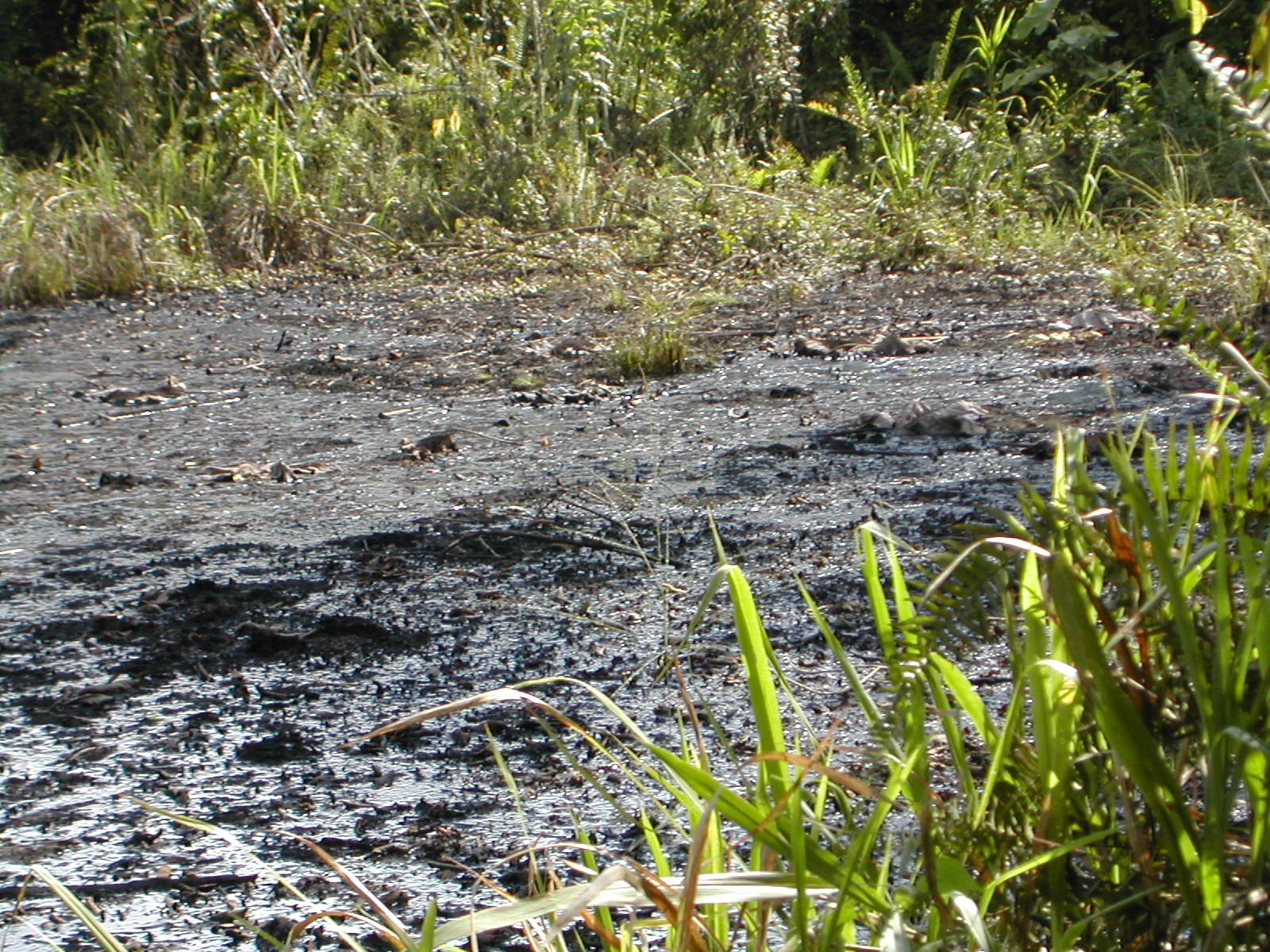
Michaels published his book in 2008 three years before an Ecuador court awarded a group of Ecuadorian villagers $9.5 billion in damages, resulting from Chevron's intentional contamination of the Amazon rainforest. The oil giant admitted to substandard drilling practices by dumping 16 billion gallons of untreated, toxic "formation water" into waterways relied on by the local population for drinking water as well as building over 900 huge unlined pits to serve as permanent storage for pure crude and water laced with known carcinogens, such as benzene and cadmium.

Comparing the amount of contamination and the amount of time it has remained in the environment with other similar disasters, Ecuador's is one of, if not the, worst environmental disasters in the world.

Since losing the Ecuador trial, Chevron has been trying to discredit the judgment through a series of retaliatory lawsuits in the U.S. Along the way, Chevron has been plying its own special "tricks of the trade" with America's judiciary and the news media – tricks that noted U.S. experts have called "fundamentally flawed" and "grossly exaggerated."

Chevron's goal has been to create doubt about the contamination's impact, arguing no proof exists that its oil and its operations harmed the environment or an Ecuadorian villager ever, even though Chevron's predecessor Texaco explored for oil exclusively in the concession area and was the only operator of all of the well sites from 1964 to 1990.

Let me repeat. During that 26-year-period – according to Chevron and its scientists – the company's admittedly substandard drilling practices did nothing to harm the environment or one single person.

This is part of their "proof": Chevron argued that Mother Nature had "weathered" the oil so much it was harmless and, as a result, no cleanup was needed. Problem is Chevron cheated on its weathering test. The oil giant's scientists found weathering – or degradation of oil – even in fresh oil. Chevron's inaccurate use of the test, USEPA Method 8014, "grossly exaggerated the magnitude of weathering." (See more of Chevron's "tricks of the trade" below.)

With its high-priced attorneys, scientists and academics, Chevron has bamboozled one activist U.S. judge and some legal reporters into believing that to prove causation of death and disease the villagers must all but exhume dead bodies and examine them until finding drops of oil inside with the Texaco brand.

Nothing less is good enough, they argue. But such nonsense has never been the standard of proof in a court of law for damages.

American Lawyer's Michael Goldhaber and Businessweek's Paul Barrett have twisted the legal standard of causation in their individual books about the lawsuit, holding the Ecuadorians to a much higher standard than they would face even in U.S. courts, which have a long history of rejecting industry demands of absolute certainty.

As Michaels points out in his book, it is scientifically impossible to prove direct causation of a health problem with absolute certainty. Making that the standard would allow Chevron and indeed the entire oil industry off the hook for every health problem they cause.

Michaels wrote: "Epidemiologists cannot state that a specific chemical exposure has definitely caused the cancer of a specific patient. The lung cancer from asbestos is indistinguishable from the lung cancer from smoking."

But, that hasn't stopped cancer victims and the U.S. government from winning damages for health impacts from tobacco and chemical companies. And, it didn't stop the Ecuadorians in their historic case. Academic studies (here and here) have been conducted that show the closer the villagers live to the oil sites, the higher the rates of cancer among them. Uterine cancer victim Rosana Sisalima with her granddaughter are shown here at their San Carlos home in 2004 near Chevron's well sites. Rosana succumbed to cancer in 2006. (Photo by Lou Dematteis/Redux)

2014-09-10-photo5.jpeg

Despite Chevron's efforts to discredit the studies, [scientists from across the world criticized those efforts; see here], the Ecuador courts accepted the evidence and ruled accordingly. In fact, three layers of courts in Ecuador – a total of nine judges, including a five-judge panel from the country's highest court - found against Chevron on precisely this legal theory.

Yet Chevron's manipulation of the evidence continues in collateral legal proceedings where Chevron hopes to discredit the Ecuador judgment and evade paying for a clean up. The oil giant's scientists, led by Dr. Sarah McMillan, are helping the company in this regard. (See here and here.)

But Chevron's antics are being more and more exposed.

Dr. Jeffrey Short, recently retired from a 31-year career as a research chemist at the U.S. National Oceanic and Atmospheric Administration, reviewed the reports of Chevron's scientists from the Ecuador case and shot holes all through them. So did Dr. Edwin Theriot, the former director of environmental programs for the U.S Corps of Engineers, no bastion of liberal-leaning environmentalism.

Dr. Short, whose report was commissioned by Ecuador's government, concluded that findings by Chevron's scientists – one of whom I know has been paid millions for his work over the years – are based on "fundamentally flawed," "grossly exaggerated," and "fundamentally inappropriate" testing methods. (See page 3.)

He wrote of Chevron's scientists: "(Their) bias toward underestimating the amount of residual crude oil in a field sample ... is well understood by Chevron's own experts."

In other words, Chevron's experts know their evidence is bullshit.

It's manufactured science – the kind Michaels warned us about – designed to produce doubt and create uncertainty, even when it's right before your very eyes.

2014-09-10-photoShushufindi.61.pit42.jpg

Chevron's Tricks of the Trade:

For a scientific explanation of these testing methods, see Dr. Jeffrey Short's study.

  • Chevron used the wrong test to measure toxins in soil – kind of like putting a stethoscope in someone's mouth to see if they have a fever. Chevron's test, though, sounded so, well, scientific: Toxicity Characteristic Leachate Procedure or TCLP. Only problem is it doesn't measure toxins in soil. (I guess Chevron thought no one would notice.)
  • Chevron undercounted the most hazardous hydrocarbons – kind of like a kid showing his or her parents only those tests with high scores and shredding the rest. Eventually, though, it catches up with the student and it did with Chevron, too. See here.
  • Chevron argued that Mother Nature had "weathered" the oil so much it was harmless and, as a result, no cleanup was needed – kind of like justifying a decision to leave date-expired bottles of poison around for kids to play with. But Chevron cheated on its weathering test. They found weathering – or degradation of oil – even in fresh oil. Chevron's inaccurate use of the test, USEPA Method 8014, "grossly exaggerated the magnitude of weathering."

2014-09-10-photoshushu38.jpeg

Wednesday, September 10, 2014

Chevron Racism Toward Ecuador Highlighted by Court Decision in BP Case

Reposted from The Chevron Pit

A legal decision handed down last week by U.S. federal Judge Carl Barbier found that BP's "gross negligence" caused the Deepwater Horizon blowout in the Gulf of Mexico.

The decision increased the company's liability to roughly $50 billion. For our purposes, Judge Barbier's decision – which sets an important benchmark for corporate accountability – has a deeper meaning.

Judge Barbier's finding underscores the obvious racism behind Chevron CEO John Watson's claim that the company's $9.5 billion judgment in Ecuador represents some sort of gouging by that country's courts. While BP pays for its spill, Chevron has managed to obtain effective impunity for decades of contamination resulting in disease and death in the rainforest of Ecuador.

Chevron has steadfastly refused to pay any part of the judgment whatsoever. The company chooses instead to spend countless millions on law firms to carry out its threat of a "lifetime of litigation" for the villagers.

It gets worse. BP's liability for the less impactful Gulf spill in the U.S. is now five times higher (and still growing) than Chevron's in Ecuador. Yet Chevron's contamination in Ecuador is more widespread, has lasted far longer, was deliberate, has severely impacted indigenous groups, and is afflicting the world's most delicate ecosystem. Further, responsibility was adjudicated after an eight-year trial.

So what gives?

Well, let's speak the unpleasant truth about environmental racism in the oil industry today.

The truth is that in Ecuador, the victims of Chevron's contamination are Ecuadorian indigenous peoples and poor villagers. In the U.S., the victims are Americans. While there is certainly extensive environmental racism in our country, the discrepancy between BP's payout and Chevron's extraordinary conceit and greed in the face of intense human suffering is a clear illustration of something gone profoundly awry.

This is not to take away from the loss of 11 lives on the Gulf Coast. At the same time, at least 1,400 Ecuadorians have died from cancer and other diseases linked to the contamination and thousands more have had serious illnesses. Far more will likely die if there is no clean-up.

We would submit there is no way on God's Earth that CEO Watson and the members of the Chevron Board of Director would dare to treat American victims of the company's pollution as viciously as they continue to treat their victims in Ecuador. If they did, they would be booted out of their country clubs, banished from their churches, and personally shamed in the town square.

Here's another illustration of this phenomenon. At the same time that Chevron's predecessor company Texaco was systematically discharging billions of gallons of toxic waste into Amazonian waterways, in the U.S. the company was properly re-injecting the same waste into deep underground wells. This was to ensure there were only minimal environmental impacts in the U.S. But clearly the company felt it could away with NOT doing it in Ecuador where there was little oversight.

Chevron also proposed that the Ecuador court adopt a clean-up standard for oil field hydrocarbons 100 times greater than that used in its home state of California. Put another way: in Chevron's universe, an Ecuadorian life is worth 100 times less than an American life in California.

Of course, Chevron's victims in Ecuador are indigenous and Latino farmers in an isolated region of a Third World country. Unlike the American victims, they do not have a law like the Clean Water Act that if used properly can lead to a penalty that begins to fit the magnitude of the transgression.

Nor do they have an elected president willing to call out the corporate polluter publicly in the strongest possible terms. President Obama, just days after the spill in the Gulf began, said repeatedly that BP would pay dearly – and that's exactly what happened. When Ecuador President Rafael Correa did the same to Chevron decades after the fact, Chevron's legal and public relations machine attacked him mercilessly for "interfering" with legal proceedings.

Chevron has spent years trying to sabotage the trial that it wanted to take place in Ecuador precisely because it thought it could manipulate the result through corrupt means. (For some examples of Chevron's corruption and delaying tactics in Ecuador, see this declaration by Ecuadorian lawyer Juan Pablo Saenz.)

Judge Barbier's finding triggers up to $18 billion in additional penalties for BP under the Clean Water Act. That's on top of the $28 billion BP already has doled out to clean up the environment and to compensate its victims.

Chevron's executives must read that number and get down on their knees to thank the gods of corporate greed for their good fortune. Chevron has yet to clean up properly even one of its estimated 1,000 waste pits sitting on the jungle floor in Ecuador that to this day continue to contaminate soils and groundwater and cause untold suffering to the people living there.

CEO Watson knows Chevron is getting off easy in Ecuador. But he still presses on with a scorched-earth strategy that includes 60 law firms and 2,000 legal personnel. He wants to send a broader message to restless natives the world over who might have claims against the company. The case will end, he told Fortune magazine, when the lawyers "give up" and go home. That's an effort to buy impunity.

BP still faces lawsuits from various Gulf states such as Alabama and Mississippi that could increase its liability for the Gulf spill to $75 billion or more. To underscore how profitable the oil majors are – and how easily Chevron could pay the Ecuador judgment – BP is still producing profits and dividends for its shareholders.

When Watson and Chevron General Counsel R. Hewitt Pate claim the Ecuadorian verdict is too high, what they mean is it is too high for the particular people who won it. Consider these facts:

  • Chevron lawyer Rodrigo Perez Pallares admitted during the Ecuador trial that the company deliberately discharged 15 billion gallons of toxic water into fresh water sources in the Amazon rainforest. The amount is an estimated 85 times more oil waste than BP discharged into the Gulf.
  • Chevron's dumping in Ecuador was done by design to increase profits. BP's spill – even though the result of gross negligence – was still an accident.

Another case involving Anadarko's recent settlement over 2,700 contaminated sites in the U.S. also underscores Chevron's inexcusable double standard. In that case, Anadarko inherited the polluted sites from Kerr McGee when it bought the company, just like Chevron inherited Texaco's pollution liabilities when the companies merged in 2001.

Like Chevron has done with Texaco, Anadarko tried to spin off the environmental liability into a separate shell company that had little capital. A U.S. bankruptcy judge rejected Anadarko's subterfuge and ordered it to clean the sites. In Ecuador, three layers of courts rejected Chevron's use of the same legal trick to evade liability.

But in Ecuador, according to Chevron, that amounts to a violation of "due process" and is an example of "fraud" against the company.

Watson and his army of lawyers have ruthlessly attacked Ecuador's government for not cleaning up their own contamination in Ecuador. Now we see that the U.S. government did not lift a finger for decades to address Kerr McGee's contamination – largely because the issue of liability was still being contested. In the end, Kerr McGee settled the matter for $5.6 billion, further underscoring how major polluters routinely pay out billions of dollars for their liabilities.

Unless you are Chevron.

Let's sum up.

In one country (Ecuador), a U.S. oil major has refused for almost 50 years to clean up its contamination, compensate its victims, or engage in meaningful settlement discussions with the affected communities. In another country (the United States), a British oil major put up $20 billion within days of its spill to compensate its victims and engaged in settlement discussions with lawyers for the victims that resulted in further liability.

We might also add that BP has put aside $40 billion in cash to deal with the Gulf spill. Chevron has put aside zero to pay off its Ecuador liability.

Watson and Chevron's Board of Directors owe the people of Ecuador – not to mention their own shareholders – an explanation for this thoroughly disparate treatment.

Friday, September 5, 2014

Rolling Stone Nails Chevron for Corrupt Acts in Ecuador Litigation

Reposted from The Chevron Pit

None other than Rolling Stone (with its 4 million Twitter followers) has now weighed in on Chevron's environmental catastrophe and cover-up in Ecuador. The picture is not pretty for company management and shareholders.

The detailed story by Alexander Zaitchik that appeared last week on the magazine's website nails Chevron for trying to sabotage and corrupt the eight-year trial that ended in 2011 with a devastating $9.5 billion judgment against the company. The judgment was later affirmed unanimously by two appellate courts, including Ecuador's highest court. In any event, we are happy to recognize good journalism when we see it.

Even though it wanted the case tried in Ecuador, Chevron now has sour grapes and is refusing to pay up. Thousands of lives are at risk due to the refusal of Chevron management to address the company's legal obligations.

For those counting, a total of nine judges in Ecuador who reviewed the scientific evidence ruled against the company. Contrast that to the ruling in New York by one activist trial judge (Lewis A. Kaplan) who refused to hear any of the scientific evidence of Chevron's contamination and who openly mocked and denigrated the Ecuadorians and their U.S. legal advisor, Steven Donziger.

One might assume that Kaplan – who denied Donziger and his clients a jury trial – knows far less about Ecuadorian law than the judges on the Ecuadorian Supreme Court, which affirmed the decision against Chevron. Deepak Gupta, Donziger's esteemed U.S. appellate lawyer, called Kaplan's trial a shocking example of "judicial imperialism" designed to dictate to all of the world's court how they should view the judgment against Chevron.

The Rolling Stone article, which gives Donziger and the Ecuadorian lawyers kudos (calling Donziger a "warhorse lawyer") for standing up to Chevron's intimidation campaign, can be read here in full.

Next up for Chevron is argument before the Supreme Court of Canada on December 11. That court will determine whether the rainforest communities can try to seize a sizable portion of the $15 billion worth of Chevron assets in Canada. A separate enforcement action in Brazil is also moving at a far faster clip than Chevron CEO John Watson is disclosing to his company's shareholders.

The immediate objective of these actions is to obtain the funds necessary to fix the massive environmental damage in Ecuador where the lives of thousands of affected villagers hang in the balance. The larger issue is for courts worldwide to show Chevron and its army of 2,000 lawyers that they are not above the law, as company lawyer Sylvia Garrigo famously asserted to Scott Pelley of 60 Minutes. (Garrigo: "We didn't want to get sued, period. We don't want to be in any court, much less a court with respect to this kind of claim, which we consider to be frivolous.")

None of this sprawling litigation would be necessary had Chevron lived up to its original promises.

Chevron fought from 1993 (when the case was filed in New York) to 2001 to have the trial moved to Ecuador. At the time, it filed 14 separate affidavits praising the fairness of Ecuador's judicial system and promised to abide by any adverse judgment in Ecuador. The promises went out the window when the scientific evidence during the trial pointed to the company's guilt and Chevron realized Ecuador's courts were able to resist its efforts to corrupt the process.

Chevron's big problem in 2015 is that the rule of law is catching up to it. Not only are two foreign courts proceeding against Chevron's assets with a third (Argentina) and possibly others waiting in the wings, but Judge Kaplan's ruling is at great risk of being reversed by a three-judge panel on appeal as Donziger's appellate brief makes clear. Aside from trying to meddle in the judiciary of a foreign country, Kaplan let Chevron pay a corrupt fact witness about $2 million in cash and benefits.

Given Chevron's diminishing returns, is a settlement between the parties now possible?

After two decades of Chevron's litigation abuse, the villagers are publicly insisting that they will not stop until they collect the entirety of the $9.5 billion judgment. We can understand why. For one thing, interest is running on the judgment. For another, Chevron won't be able to pressure or corrupt the courts of Canada like it thinks it can do in Latin America.

The other factor working against Chevron is that the amount of the Ecuador judgment is miniscule compared to BP's enormous liability (now approaching $50 billion) for the far smaller Deepwater Horizon spill in the Gulf of Mexico. Unlike BP's raging spill, what Chevron did in Ecuador was intentional and not an accident. And it has lasted for almost five decades, not five years.

The reality is that Chevron has gotten off easy in Ecuador given the magnitude of what it did.

We hear that CEO Watson is emitting smoke signals about some sort of exit strategy. We can't say we blame him. If Chevron really wants lasting peace, we strongly suggest to Watson that he not make the same mistake Texaco made in the 1990s by trying to "settle" with Ecuador's government while ignoring the communities.

That mistake by Texaco led only to endless litigation and Chevron's worsening reputation as a leading rogue actor in the oil industry. It also led to huge legal fees – estimated at $2 billion over several years – and major distractions for upper-level management. There is also potential exposure down the road for conspiring to interfere with court proceedings. (Watson himself was deposed under oath in the case while two high-level Chevron officials were indicted in Ecuador for fraud.)

While on the topic of journalism, we want to give a big shout out to William Langewiesche, the writer for Vanity Fair whose brilliant 2007 article on lead Ecuadorian lawyer Pablo Fajardo was the first by a major American magazine to capture the context of Chevron's awful track record in Ecuador.

Like the Rolling Stone article, the earlier Vanity Fair piece is must reading for anybody who wants to understand the reality of Chevron's venality in Ecuador.